
results
13 Best Apps for Tracking Semaglutide Results and Progress

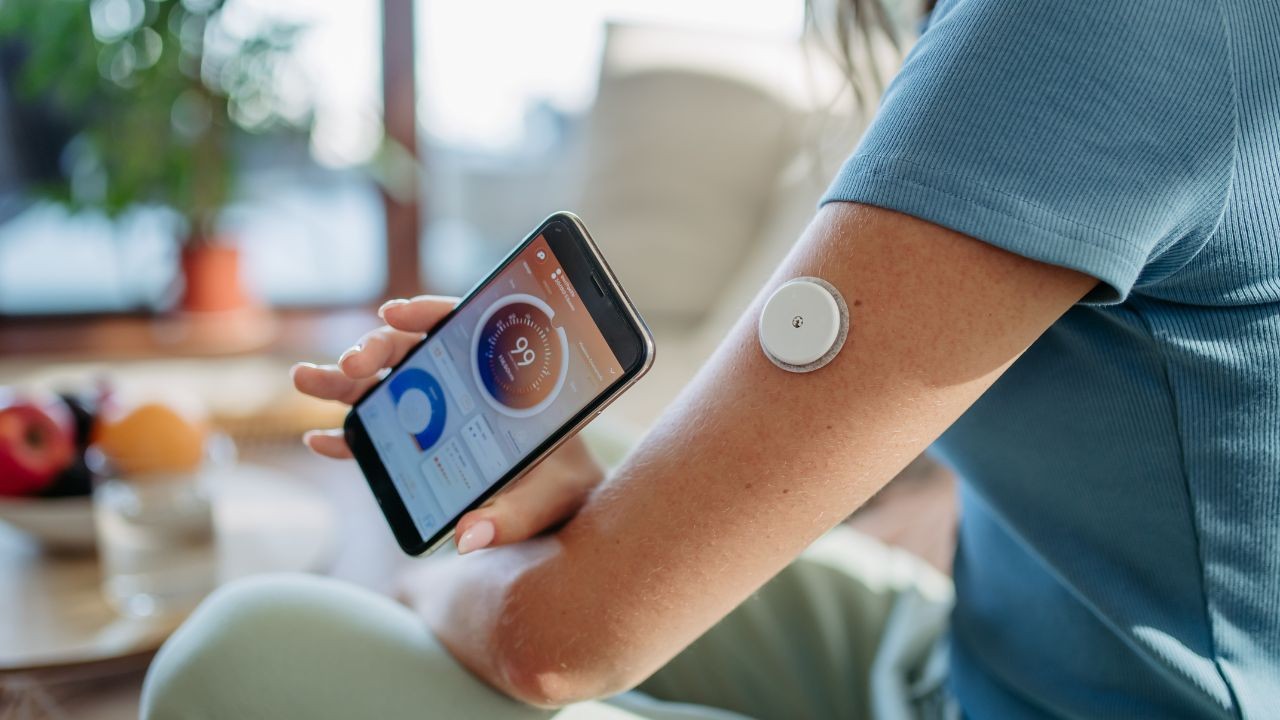
Effective tracking is essential when using semaglutide to ensure that weight loss targets fat rather than muscle. Without careful monitoring, subtle changes in body composition may hinder long-term progress. Converting everyday data into actionable insights fosters adjustments that maintain a healthy metabolic balance.
A centralized tool simplifies logging doses, monitoring weight shifts, and analyzing body composition trends. Detailed records support timely changes in diet, exercise, and dosing to prevent small issues from becoming setbacks. MeAgain’s GLP-1 app provides tools that streamline tracking for more meaningful outcomes.
Summary
GLP-1 medications create wildly different outcomes depending on how patients manage details between doses, according to HealthVerity Blog's 2025 analysis of real-world data. The medication creates an opportunity, but what you do with that window determines whether you keep muscle, avoid rebound weight gain, or cycle through dosage adjustments that could have been avoided with better tracking.
Weight alone tells you almost nothing useful about the progress of semaglutide. Losing 15 pounds means something very different if 10 of those pounds were muscle. Most GLP-1 users accidentally undereat protein by 40% or more because appetite suppression works so effectively, accelerating muscle loss that undermines long-term metabolic health and creating plateaus that feel like treatment failure.
Side effects don't announce themselves clearly on GLP-1 medications. They creep in as fatigue you blame on poor sleep, or digestive issues you attribute to something you ate. When you log consistently, patterns emerge that nausea always peaks 48 hours post-injection, or that energy crashes correlate with skipping protein targets three days in a row. These aren't random occurrences, but your body is telling you exactly what it needs.
The gap between raw data and actionable insight stops most tracking efforts. You see your weight plateau for two weeks and stare at the graph, unsure whether to increase your dose, eat more protein, change your injection timing, or wait it out. Apps that provide context alongside data, explaining what's normal and when to adjust, help you act instead of just observe.
Apps you'll actually use three months from now beat sophisticated platforms you'll abandon after the novelty fades. Test tracking tools during a stressful week, not just when you're motivated and have extra time. The app that survives your worst week, when you're tired, busy, or dealing with side effects that make screens unbearable, is the one worth keeping long term.
GLP-1 app addresses this by centralizing injection logs, nutrition tracking focused on protein and fiber, side-effect monitoring, and body composition data in a single interface that adapts as your treatment progresses from early-stage side-effect management to long-term muscle preservation.
Table of Contents
Why Tracking Semaglutide Results Matters
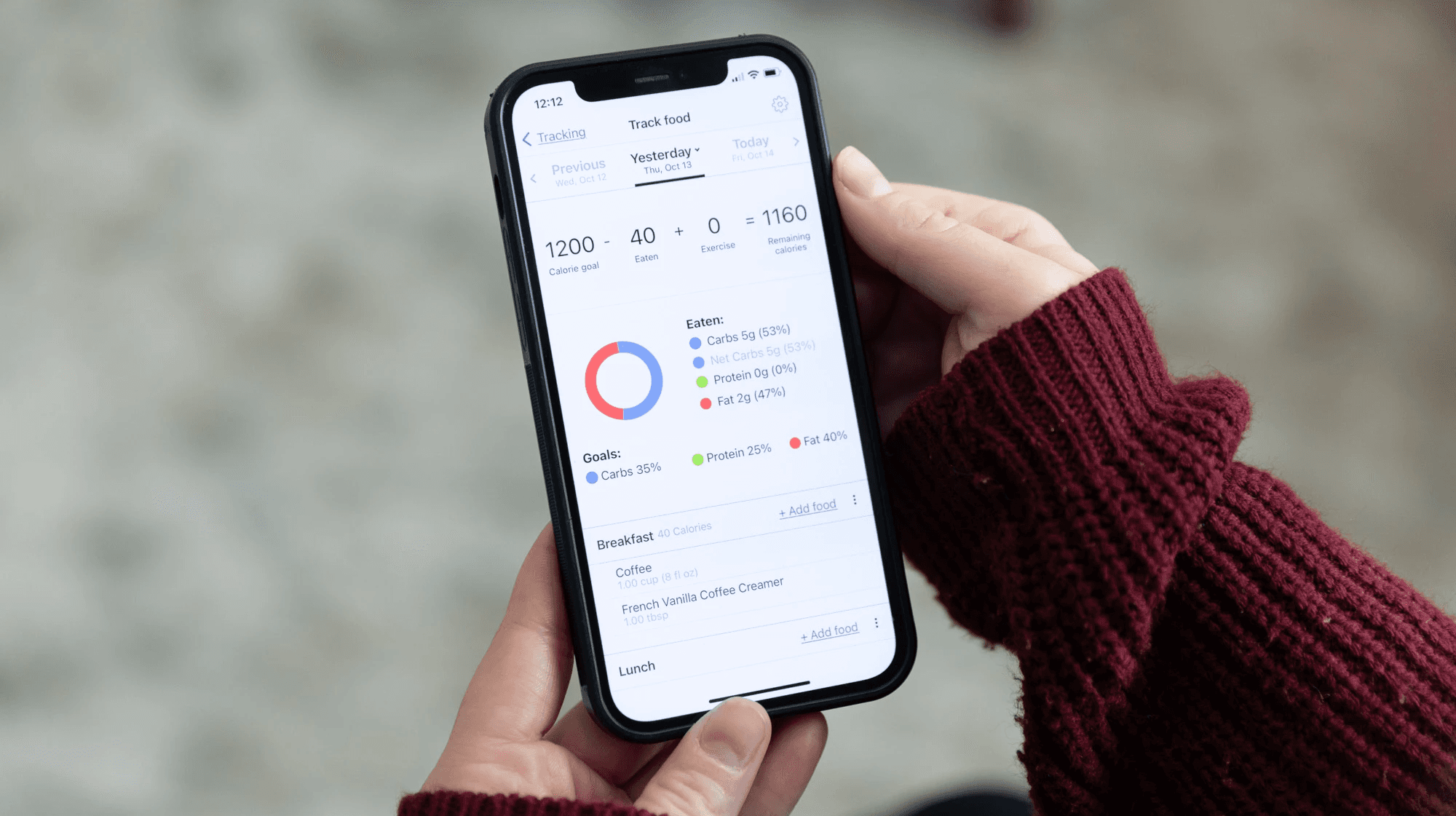
Tracking your semaglutide results is very important if you want the medication to actually work. If you don’t monitor your weight changes, side effects, protein intake, and dosing regularly, you're really going through a treatment without a clear plan. The difference between having amazing results and frustrating plateaus often comes down to whether you notice the early signals your body is sending you.
Many people think that the medication does all the hard work: they inject it, their appetite drops, and they lose weight. However, GLP-1 trends are reshaping diabetes & obesity care with real-world data on adoption, outcomes & future drugs in 2025, according to the HealthVerity Blog. This information shows something very important: results vary significantly depending on how patients handle the details between doses.
The medication gives you a chance, and what you do during that time will determine whether you keep muscle, avoid weight gain, or need dosage changes that could have been avoided. To help you track your progress efficiently, consider using our GLP-1 app to manage your results.
What happens when you don't track?
When you don't track, patterns can slip by unnoticed. That constant nausea on day three after the injection might mean that your dose is too high. Without keeping a regular log, you can't see these connections. The sudden return of food noise in the middle of the week could mean your medication is leaving your system faster than you thought, or it might just be stress. Without data, you're just guessing. But with data, you can make smart adjustments before small issues compound into stalled progress or uncomfortable side effects that make you want to quit completely.
Why is weight alone not enough for tracking?
Weight alone tells you almost nothing useful. You need to track body composition shifts because losing 15 pounds means something very different if 10 of those pounds were muscle. Protein intake matters because GLP-1 medications suppress appetite so effectively that many people accidentally eat 40% or more less protein, which speeds up muscle loss. Hydration levels affect how you feel, how your body processes the medication, and whether side effects get worse for no reason. Dosing consistency determines whether your medication levels stay stable or swing wildly, causing unpredictable hunger and energy crashes.
How do you track effectively without overwhelm?
The real challenge isn't just knowing what to track; it's actually doing it every day without it becoming a tiring task. Spreadsheets often get left unused, and using many apps can make things more complicated. Notes scattered across your phone can be hard to read when you need to find a trend or get ready for a doctor's appointment. Platforms like MeAgain's GLP-1 app bring together injection logs, nutrition tracking, and symptom monitoring all in one place. This connects what you do each day to your weekly patterns. This way, users can see how their bodies react to changes in dosage, identify the best times for injections, and notice side effects before they slow down progress.
How can side effects be tracked?
Side effects often do not announce themselves clearly. They can creep in as fatigue that one might blame on poor sleep, or as digestive issues that one thinks are caused by what one has eaten. By logging things consistently, patterns become clear. For example, one might see that the nausea always peaks 48 hours after an injection, or that energy crashes happen when skipping protein targets for three days in a row. These situations are not random; they are signals from the body showing its needs. The message becomes clear only when there are enough data points to see the pattern.
Why is dosage optimization important?
Dosage optimization requires consistent visibility. Without tracking how hunger, energy, and side effects change throughout the weekly medication cycle, it’s hard to know if one has found their sweet spot. Some individuals feel best at higher doses with few side effects, while others may need lower doses and careful attention to when they eat. The only way to find out what is right for each person is to track enough cycles until a clear pattern appears.
What do most tracking systems miss?
Most tracking systems fail to provide meaningful context for the data. They present information without helping users understand what it means. For example, a graph showing weight loss can be motivating, but a plateau leaves individuals unsure of what to do next. Should they adjust their dose, increase their protein intake, change their injection day, or simply wait it out? This gap between raw data and useful advice often leads to frustration and slows down progress, even when individuals are carefully tracking their results.
What tools help optimize tracking effectiveness?
Knowing what to track is only half the equation. The real question is which tools actually help you act on that information without adding more complexity to an already demanding process. For example, the GLP-1 app is designed specifically to simplify this process.
Related Reading
13 Best Apps for Tracking Semaglutide Results
The right tracking app doesn't just record data; it connects the dots between injections, nutrition, side effects, and progress. This helps users make decisions rather than guess. Some apps focus on specific parts of the process, while others combine everything you need. The difference between an app that gets abandoned in two weeks and one that becomes essential depends on whether it reduces friction or adds to it.
1. MeAgain: Everything You Need in One Place
MeAgain was built just for GLP-1 users, and it shows. Every feature addresses the unique challenges of these medications, including injection tracking, food logging, hydration monitoring, side-effect management, and progress visualization, all working smoothly together. Unlike many other apps, MeAgain understands that GLP-1 users need more than just calorie counting. They need tools that account for reduced appetite, precise medication timing, and changing nutritional needs as the medication works. Moreover, our GLP-1 app smoothly integrates all these functionalities for a better user experience.
The interface feels easy to use instead of confusing, making daily tracking something users will keep doing over time. Important nutrients like protein and fiber are automatically highlighted because they matter when appetite wanes. Users benefit from smart injection reminders that adjust to their schedules, avoiding strict timing demands. Shot history and injection site rotation tracking help ensure doses aren't missed and that the same spot isn't used too often. Personalized hydration goals change with body weight and medication response, keeping users hydrated even when they don’t feel thirsty.
Weight tracking goes hand in hand with body measurements, energy levels, and appetite trends to give a full picture, not just the number on the scale. Side-effect logging records nausea, fatigue, constipation, and other reactions in detail, helping quickly identify patterns. When it’s time to meet with the doctor, users have concrete data rather than vague memories of how they felt weeks ago. Many people like having everything in one app. Personalized nutrition goals take away the guesswork about getting enough protein when appetite is low. Smart injection scheduling allows shots to fit into users' lives instead of controlling their schedules. Side-effect tracking helps quickly identify triggers, whether they're related to timing, dosage, or other aspects of their routine that might increase discomfort.
Best for: Anyone who wants comprehensive GLP-1 tracking without juggling multiple apps. It is perfect for beginners and for anyone managing side effects who needs clarity quickly.
2. Dose AI: AI-Powered Food Focus
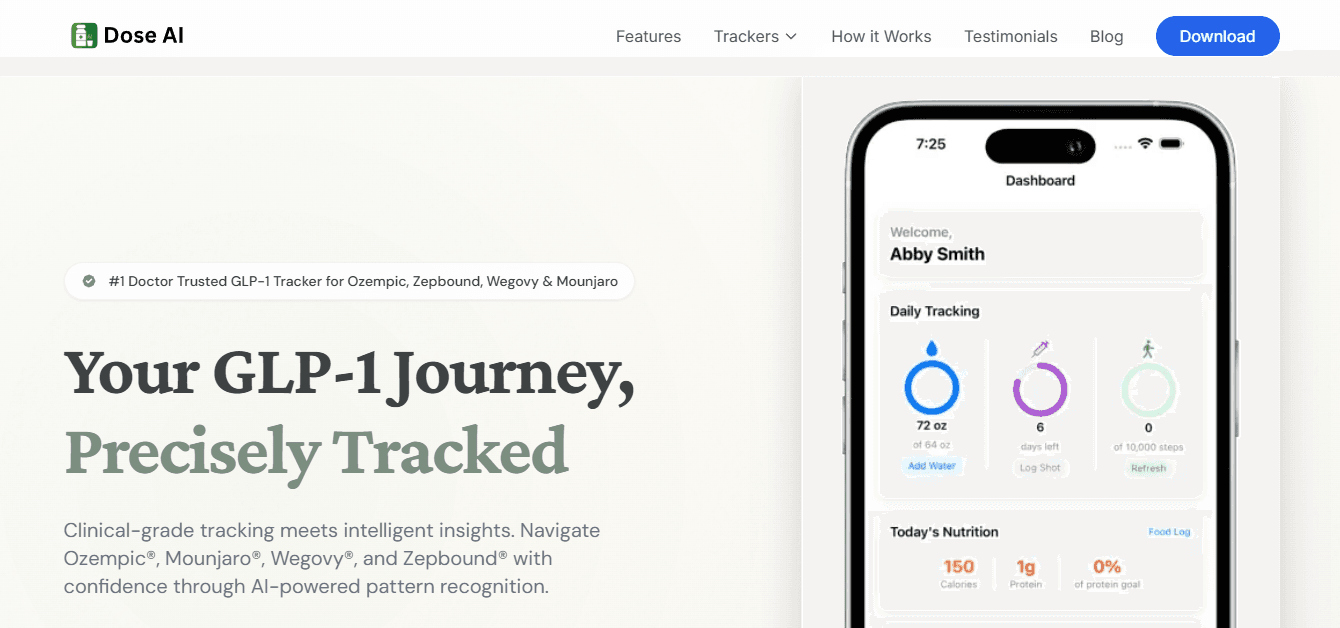
Dose AI make meal logging easier using artificial intelligence. People taking GLP-1 medications often have a lower appetite, which makes keeping track of food feel like extra mental work. By just taking a photo of a meal, Dose AI automatically calculates the macronutrients. It even suggests personalized meal ideas based on preferences and dietary needs, helping users get enough protein and fiber without any hassle. The app also helps with basic medication tracking by keeping a simple record of injections. While it has symptom tracking, it doesn't go as deep as GLP-1-specific platforms.
Where Dose AI really shines is in giving nutrition advice. When users look at their plate, wondering if they've eaten enough to keep their muscle mass, the app provides answers right away. Photo-based logging makes food tracking easy. Meal suggestions help take away the stress of choosing what to eat, especially when you're not very hungry. You don't have to look through large databases or guess portion sizes; the AI handles the calculations while users focus on eating enough through the MeAgain app.
Best for: Users who focus on food tracking and meal planning and already have their systems set up for injections and monitoring side effects.
3. Shotsy: Simple Injection Management
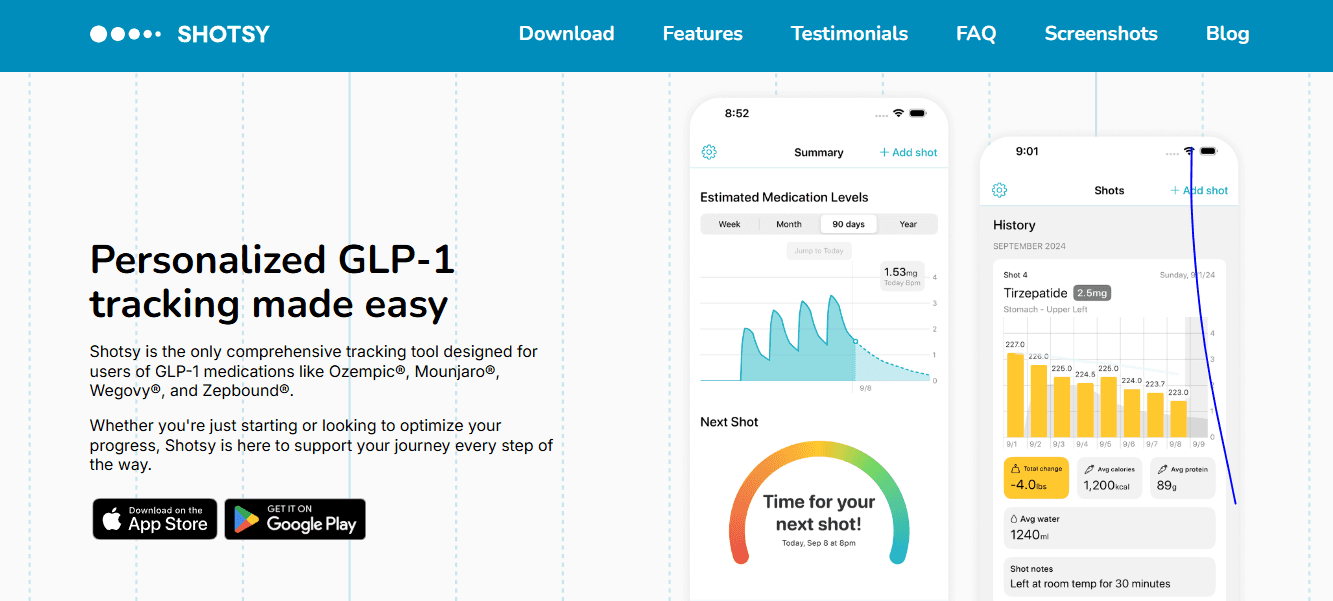
Shotsy keeps things refreshingly simple. It focuses solely on tracking injections, removing unnecessary features. If users already track their meals or symptoms, Shotsy makes sure their shots are never missed. The app tracks injection history, sets reminders, and rotates sites correctly. Its simple design respects users' time and helps reduce mental clutter. Quick logging means users can log in within seconds. Reliable notifications come when they are needed, not just when it's convenient for the app. Site rotation tracking ensures proper injection technique, so there's no need to remember which spot was used last week. It's fast, easy to use, and really good at one thing: managing injections. There are no distractions or extra steps. While some people might need more detailed platforms, others just want their injections handled flawlessly.
4. Lumen: Metabolic Insights

Lumen isn't GLP-1 specific, but it provides valuable metabolic feedback. It measures how the body processes carbs and fats, offering guidance for energy and nutrition patterns. For GLP-1 users, understanding which foods provide steady energy helps manage appetite changes and optimize meals when only small amounts are consumed. Metabolic feedback reveals whether the body is burning carbs or fats. This insight helps make better meal choices instead of just counting calories. Also, meal planning suggestions highlight foods that support steady energy throughout the day. Nutritional awareness improves as people respond to their body’s real needs instead of relying on general recommendations. When Lumen is used with another app that tracks injections or symptoms, users get a fuller picture of their health. The metabolic insights from Lumen fill in the gaps left by standard tracking methods, especially about energy fluctuations that GLP-1 medications can cause.
5. MyFitnessPal: Extensive Food & Nutrition Database
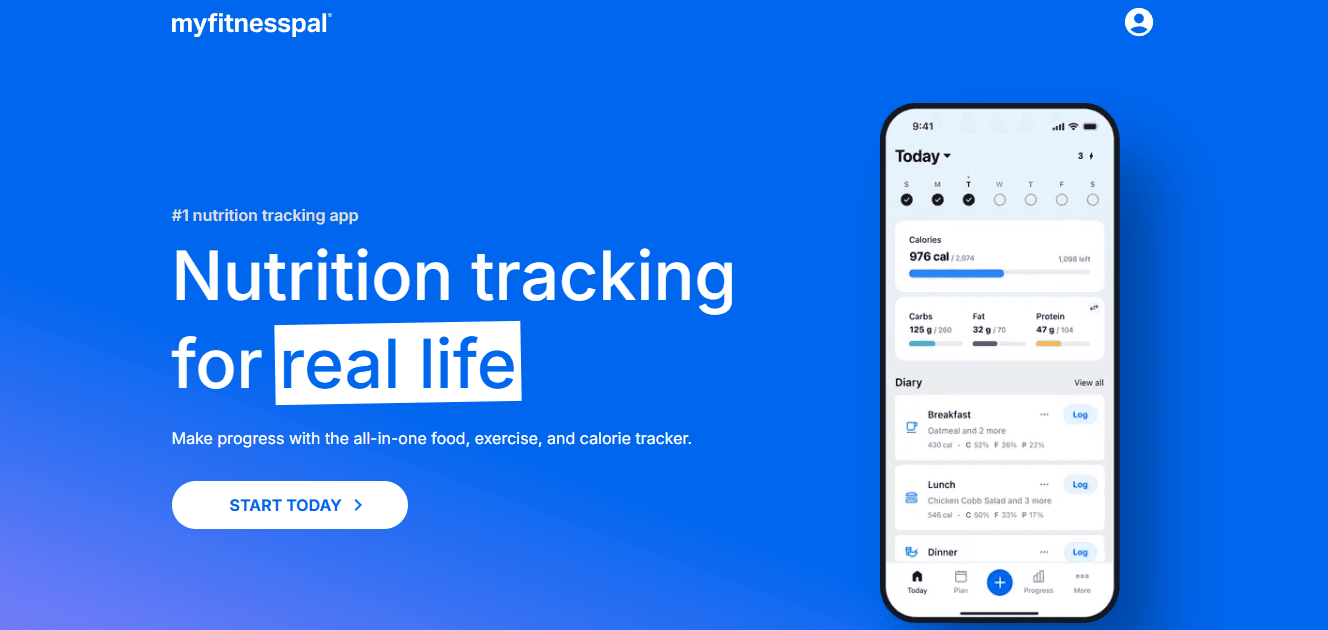
MyFitnessPal is a classic app featuring a massive food database. Users can track meals, macros, hydration, and calories with an interface that has been improved over many years based on feedback. While it doesn't include injection reminders, adding notes can help users track patterns if they log consistently. The extensive food library allows you to log almost anything. From restaurant meals to home-cooked recipes, there is a good chance that someone has already entered the nutritional data. For GLP-1 users who want to ensure they get enough nutrients, especially when their appetite is low, this wide range of options is very important. Hydration tracking effectively monitors water intake, while macro tracking helps users meet their protein targets, even when eating feels difficult. The user-friendly interface makes it easy to go from deciding to track to actually tracking.
6. Ate Food Journal: Mindful Eating Companion

Ate Food Journal takes a mindful approach. It encourages users to write down their meals and reflect on their hunger signals and emotional triggers, rather than just counting calories. For GLP-1 users whose appetite can change a lot, this method helps people become more aware of their eating habits that counting calories might miss. The simple interface uses a friendly, supportive tone. Users are not criticized for eating too much or too little. Instead, they learn about the connection between food, emotions, and physical signals. When appetite suppression makes eating feel automatic, this mindfulness helps keep a connection to the reasons and methods behind eating. Combine with an injection tracker for full coverage. The Ate Food Journal focuses on emotional and behavioral aspects, while other apps handle medical details.
7. SHOTLOG: Peptide Tracker
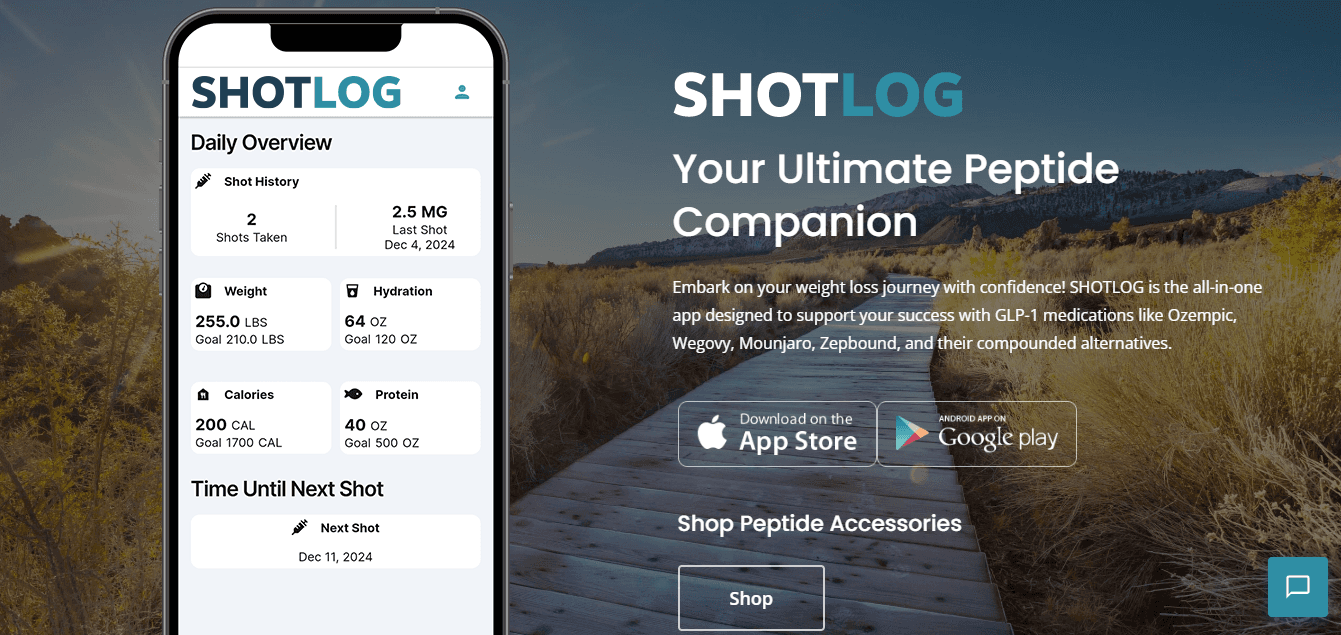
SHOTLOG runs on Android and targets users who manage custom peptide cycles with precise units and frequencies. Users can set up different protocols, save peptide calculations, and quickly access them when they need to change their dose or review their patterns. The app tracks dosing, progress, and results with precision. This is very important for managing complicated medication schedules. Weight tracking, body measurements, and nutrition logging are also part of the app's features. They give users enough information to notice trends across different factors.
8. Pep App: GLP-1 Shot & Habit Tracker
Pep App works on iOS and helps track semaglutide and tirzepatide medications. You can set reminders for medication, hydration, meals, and weigh-ins. This method makes your GLP-1 journey easier by turning it into everyday habits instead of a big lifestyle change. The app also allows you to log side effects and track injection sites. It estimates the amount of medication in your body using half-life information. This helps users know why their appetite or side effects might get stronger at certain times during the week.
9. CareClinic: GLP-1 Shot Tracker
CareClinic is available on both iOS and Android, offering personalized injection reminders that adapt to users' schedules. The injection site tracking feature uses a body map, making it visual and easy to use rather than something users need to remember. Symptom journaling lets users keep track of side effects in detail to share with healthcare providers. Refill reminders make sure that medication stays consistent, avoiding gaps that could disrupt progress or cause withdrawal symptoms.
10. Peptide Log
Peptide Log is available on iOS and helps manage multiple peptide protocols with custom schedules. Users can monitor upcoming injections, track their progress through charts, and keep track of vials, pens, remaining amounts, and expiry dates so they never run out unexpectedly. The weight data syncs with Apple Health, smoothly linking GLP-1 tracking to a larger health system. The visuals in the charts clearly show progress, making it easier to spot plateaus or increases that plain numbers might hide.
11. WeTide App
WeTide focuses on nutrition and injections with smart food logging. Users can take a picture of their food or scan barcodes, and WeTide automatically calculates the protein and fiber content. These nutrients are very important, especially when appetite is low, and the app emphasizes them without overwhelming users with unnecessary macro details.
The daily overview dashboard provides a single-screen summary of water intake, protein, fiber, side-effect records, and injection days. This design helps users maintain control without the hassle of managing multiple programs or constantly switching between apps. The Journey Card serves as a personal history, combining photos, weight, and symptom entries to allow users to see trends over time rather than just random data points. While the app emphasizes nutrition and injections, it does not focus much on body composition.
Users wanting detailed body fat percentage tracking or advanced analytics may want to use WeTide alongside another tool. However, for those wanting to keep their nutrition and medication on track without complexity, WeTide works well.
12. GLP Compass
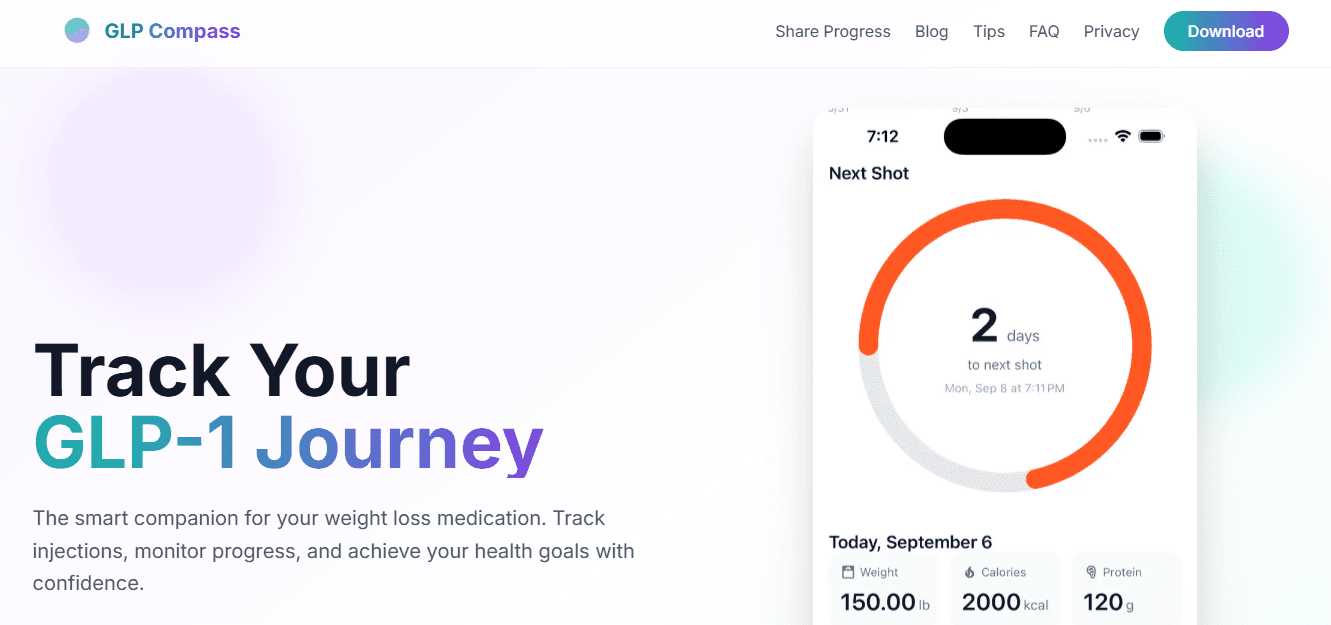
GLP Compass tracks GLP-1 medications like Ozempic, Wegovy, Mounjaro, and Zepbound. It focuses on progress analytics and trend analysis. Smart injection reminders help users stay on schedule, while side effect logs record patterns. Medication level estimation uses half-life information to show expected levels at any time. This helps users understand why appetite or side effects might change during the week. Advanced analytics include graphical displays that make complex data easier to understand. Users can view their health journey through charts and dashboards that show connections among dosage, nutrition, and overall wellness. Community support features link users with others facing similar challenges.
The GLPeak platform has received over 1200 ratings, showing strong user interest in GLP-1 tracking tools that focus on data visualization and pattern recognition. The growing need for analytics-driven tools shows that users want more than just logs; they seek insights that help them make better decisions. The app is made for users who focus on data and need more insight over time. For those who understand spreadsheets and graphs, GLP Compass turns tracking into usable intelligence. However, this complexity can be a challenge; beginners might find the interface confusing until they understand the importance of the different metrics.
13. GLP1 Tracker

GLP1 Tracker helps track specific GLP-1 medications, like semaglutide and tirzepatide. Users can enter their injection history, including the timing and dosage of each injection. They can also monitor their weight, log side effects, and look at progress charts that show their journey over weeks and months. Smart reminders help users stay consistent with their injections. Progress charts show changes that daily weigh-ins might hide.
Some users like the option to export reports and share them with their doctors. This feature turns tracking data into meaningful medical discussions rather than vague discussions about feelings. The simple and user-friendly interface makes it easy to get started. Good developmental visualization lets users see their progress even during plateaus. The app supports many GLP-1 drugs, so if users switch medications, they don't need to change apps. Exportable reports connect personal tracking with professional medical help.
While the app does not have as many nutrition tools as meal-planning apps, its advanced features require only a basic understanding of health-tracking concepts. This knowledge is usually manageable for most GLP-1 users based on their treatment experiences.
Which app should I choose?
Having thirteen options creates a new problem: which one actually matches your specific goals and daily reality?
Related Reading
How to Choose the Right Tracking App for Your Goals
The right app depends on your current challenges. If side effects are unpredictable and intense, you need robust symptom logging with pattern recognition. If you're losing weight but feeling weak, prioritize nutrition tracking that emphasizes protein and helps prevent muscle loss. If you often forget injections or struggle with site rotation, medication management becomes essential. Start with your most pressing issue rather than focusing on a lengthy feature list.
Your work schedule affects which tracking approach will last beyond week two. Night shift workers require flexible reminder systems that adapt to their rotating sleep patterns, rather than rigid 9 a.m. notifications. People with unpredictable schedules benefit from apps that allow retroactive logging without penalty or judgment. If you have a full-time job and already feel overwhelmed by the mental load of tracking every detail, opt for simplicity over complexity. An app you will actually use is more valuable than a sophisticated platform you may abandon.
Tracking every single item consumed can create real barriers to consistency, especially when combined with demanding work hours. Some individuals thrive on detailed macro tracking, while others find it so draining that they quit entirely. If logging feels more like punishment than insight, a different approach is needed. Photo-based meal logging can remove friction. Using pre-configured 'go-to' meals lets you track nutrition without the burden of daily calculations. The aim should be to gather enough data to make informed decisions, not to create a second job.
What capabilities do early-stage users need?
Early-stage users need different abilities than those who have been in treatment for six months. When starting semaglutide, injection tracking and side effect logging are very important. Users start to learn how their bodies react, notice patterns, and figure out the best times for injections. While tracking weight can motivate, the main goal is to understand how symptoms such as nausea, fatigue, and appetite suppression change throughout the week.
Why is nutrition tracking important as treatment progresses?
As treatment continues and side effects improve, keeping track of nutrition becomes very important. Your appetite drops so much that reaching your protein goals takes extra effort. Without tracking, most people accidentally undereat protein by 40% or more, which speeds up muscle loss that hurts long-term results. Apps that track protein and fiber intake can help you maintain muscle mass even when eating feels difficult.
How can apps adapt to your treatment journey?
Platforms like MeAgain's GLP-1 app adapt to each stage of your journey. Early on, the focus is on medication consistency and side effect patterns. As you stabilize, nutrition goals and body composition tracking become more important. This adaptive approach lets the app grow with users and avoids a one-size-fits-all model that fails to account for how GLP-1 treatment changes over time.
How does sharing data enhance medical conversations?
The ability to export reports and share data with your doctor changes tracking from just personal record-keeping into useful medical discussions. When you can show documented patterns (like nausea always peaking 48 hours after an injection, or energy drops connecting with low protein intake for three days), your provider can make informed adjustments, instead of guessing based on unclear descriptions of how you feel.
Why is effective communication important during medical appointments?
Users often find it hard to share their experiences clearly during short medical appointments. For instance, saying, "I feel nauseous sometimes" gives the doctor very little useful information. On the other hand, saying, "Nausea rated 7/10 happens regularly 36-48 hours after injection, goes along with doses over 1.0mg, and gets better with ginger tea" gives the doctor specific information to work with. Apps that create professional-quality reports help solve this issue by turning daily logs into clinical evidence.
How does comprehensive tracking validate your experience?
Some providers ignore patient concerns without objective data. This can make people feel frustrated when they know something isn't working but can't prove it clearly. Keeping detailed records helps to show that these experiences are real. If weight loss isn't happening even when someone is following the program perfectly, the data clearly shows this. Also, if side effects are serious enough to think about changing medications, keeping track of symptoms can help that conversation. So, tracking is a way to advocate for oneself.
What challenges can sophisticated analytics present?
Sophisticated analytics offer great potential, but they mean little if users cannot use them effectively. Some apps require an understanding of health-tracking concepts beyond basic logging. Features like metabolic measurements, body composition percentages, and medication half-life calculations provide valuable insights, but they also require a baseline knowledge for proper understanding. For those who are good with data and enjoy seeing complex patterns, advanced platforms can really reward that curiosity. On the other hand, if the goal is simply to see if things are working without getting into the data, simpler tools might work better.
How can apps provide context to raw data?
The gap between raw data and actionable insight can stop most people in their tracks. You may notice your weight plateauing for two weeks, yet staring at the graph leaves you unsure what it means. Should you increase your dose, eat more protein, change injection timing, or simply wait it out? Apps that provide context alongside data, explaining what's normal, when to adjust, and what patterns signal problems, help you take action instead of remaining a mere observer.
What should you consider when testing new apps?
New apps can feel exciting for about ten days. Then, reality sets in. The question shifts from whether an app impresses in the first week to whether it remains useful three months later, when the newness fades and using it becomes routine. Features that seem clever at first often turn into friction points. While gamification can motivate some users, it might annoy others. Also, social features can help some people stay accountable, but they might feel invasive to those who want privacy and personal space. Some users may want to check their progress without the added pressure of social comparison, as we discussed in our discussion about the importance of privacy.
How can download periods help in app selection?
Download periods let users check how well an app works in real-life situations. It's important to use the app during a tough week, not just when you feel motivated and have free time. Pay attention to whether you keep using the app when you feel tired, when your schedule gets busy, or when side effects make it hard to look at screens. The app that helps you through your hardest week is the one that's really worth keeping.
What is the importance of data use after downloading?
Choosing the app is only the beginning. How you use the data you collect will decide if tracking becomes a life-changing experience or just another goal you give up on.
Track Your Semaglutide Results and Optimize Your Weight Loss
Tracking your semaglutide results isn't about focusing too much on numbers. It's about creating a feedback loop that shows you when things are working and when changes are needed. The medication offers a chance, but what you do between doses is key to keeping muscle, avoiding plateaus, and feeling like yourself again. Download the MeAgain weight loss tracker app today to make your GLP-1 journey something you can see, understand, and improve every day.
MeAgain brings together everything important: medication doses, weight trends, body measurements, side effects, and daily habits like protein, fiber, water, and exercise that help keep your results steady. You can log in in just seconds, not minutes. The Journey Card shows your transformation visually so you can see every milestone as progress, not just numbers. Thousands of users have found that tracking is motivating when the app makes it easier, not harder, turning your weight loss journey into clarity rather than guesswork. Download MeAgain today and start tracking your results: safely, effectively, and with a bit of fun along the way.
Related Reading
What to Do When Semaglutide Stops Working
How Much Protein Should I Eat on Semaglutide
How to Track My Semaglutide Side Effects?
Best App for Tracking Semaglutide Results